Building America250: The Industry Behind the Dream
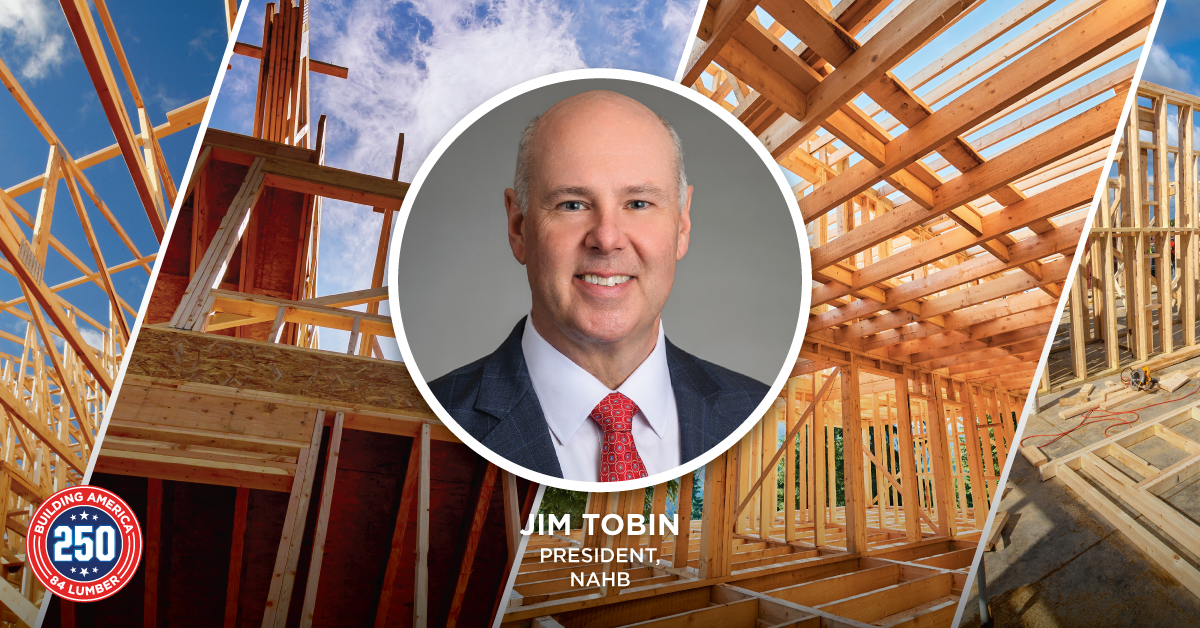
As we get closer to the 250th anniversary of the United States, I find myself thinking less about milestones and more about what comes next.
For me, it comes back to something very simple: housing and opportunity.
I have spent most of my career in this industry, and over time, the bigger picture becomes clear. A home goes far beyond a structure. It’s where life happens, where families grow, where stability takes shape, and where people begin to build a future.
Lately, that perspective has become more personal. I have one child in college and another still in high school, and I think about what lies ahead for them. Will they have the same chance to put down roots, build equity, and create something of their own?
For generations, homeownership has been one of the clearest paths to the middle class, offering both stability and a way to build something that lasts. When that path becomes harder to reach, the impact extends well beyond the housing market, it shapes how people see their future.
After World War II, the United States experienced one of the greatest housing expansions in its history. Entire communities were built to support returning service members and their families, helping define modern American homeownership for generations. That period reinforced a principle that still holds true today: when housing expands, opportunity expands with it.
The impact of housing reaches far beyond individual homes. It supports an entire network of industries – builders, suppliers, manufacturers, and local businesses all moving together. As homes are built, communities grow, schools expand, and infrastructure improves. The ripple effect extends well beyond the front door.
One of the challenges today isn’t demand. People want homes. They want stability and the sense of ownership that comes with it. The challenge is ensuring there are enough options to meet people where they are in life.
Every home also represents a long chain of effort. It starts with an idea, but it takes materials, planning, coordination, and a wide range of people working together to bring it to life. Partners across the supply chain play a critical role in making that happen. Companies like 84 Lumber help ensure that what is designed can be built and built well.
That level of coordination can be easy to overlook, but it remains essential. When it works, projects move forward efficiently. When it breaks down, delays and costs follow.
What gives me optimism is that the desire for homeownership hasn’t changed. If anything, it has become more meaningful. People still want a place to call their own and continue to see value in putting down roots and building something over time.
As we approach this 250-year milestone, I think about what we want to carry forward. Housing has always been central to the American story.
If we get this right, we are building more than homes. We are shaping the next chapter of opportunity for the people who will define what comes next.